
Note to Readers: Kids biting and hitting at school or the playground cause a stressful parenting issue that many of us would rather not have to address. Harsh punishments usually escalate the unwanted behaviors. It is important to understand why a child might hit, bite, or scratch and guide your child to more acceptable social behavior. Thanks to Wendy, Ava, Dr. Lynne for sharing their professional and parenting wisdom.
by Wendy Young
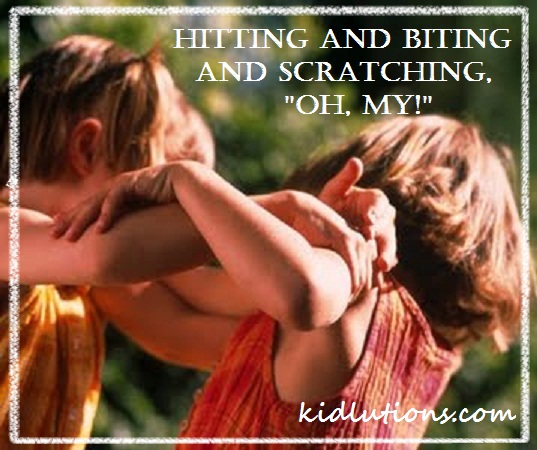
Physical acts of aggression such as biting, hitting and scratching are amongst the biggest concerns voiced by parents and educators of toddlers and preschoolers. While it’s shocking and probably embarrassing when your child becomes physically aggressive, it’s not unusual behavior for young kids. When children are overcome with feelings such as anger, fear, frustration or disappointment, for example, because another child has possession of a toy they want, they don’t have the language to express it.
But the question remains, why does a child engage in physical aggression?
To answer this question, I’ll pull from an up and coming book, “Time-In, Not Time-Out”, co-written by Ava Parnass, Dr. Lynne Kenney and me. This soon-to-be-released book tackles some of the most challenging behaviors of early childhood and helps parents and caregivers respond in ways which pull children towards greater success.
To start off, let’s look at this from two separate perspectives; biological and social.
From a Biological Perspective: To a young child, physical aggression seems like the quickest way to get her point across, “I’m frustrated, mad, or overwhelmed.” Not yet having the verbal skills, or the cognitive ability to process all that is going on around her or inside of her and put it into words, it’s no wonder that objectionable behavior becomes one of the quickest routes the child sees to get her needs met. A child simply lacks the verbal skills to say, “Hey, that is my toy, I am playing with it, find something else to play with.” Almost makes you laugh a bit, because when does a child get language like that?
From a Social Perspective: A young child doesn’t yet have the maturity or skills to relax, take a deep breath and express her frustration like an older child could. Nobody is born with these abilities. These skills will take time and require a patient, nurturing parent or caregiver to convey and model these abilities. This is a process and must continually be demonstrated to the child in various areas of her life.
A Call for Help
Over and over again parents ask, “How do I punish my child out of this behavior?” The answer is, “You Don’t.” We teach children into new behaviors, we cannot punish them out of undesirable ones. Parents and caregivers need to take a deep breath and recognize that physical aggression is one way for a child to say, “I need help from you in figuring out how to do this better.” Assume when your child bites, or engages in other acts of physical aggression, that she had no other choice available to her at the moment. She needs your support in finding better alternatives.
Wouldn’t life be easier for us big people, if we could look at every misguided behavior in this manner, every single time? Yes, I think it would!
First Things First: Help the Injured Child
Okay, so the physical altercation has already taken place. What to do?
- Tend to the injured child first. Offer comfort measures.
- Help both parties calm down.
- Allow the child who caused physical harm to make amends. This does not mean making them apologize. The child can apologize if he/she chooses, but that should not be insisted upon by the adult. Most importantly, you will want to help the child heal the relationship with the child she injured by allowing her to offer to fetch an ice-pack or provide the injured child with a stuffed animal or some other “lovie”.
- Engage both children in a soothing activity, if they are open to it.
The Final Analysis: Help the Child with Misguided Behavior
Tending to the injured child is just one part of the equation. Your work is not yet done here. Next, it’s time to help the child with misguided behavior learn some better ways to get her needs met in the future.
You can start by saying things such as:
- “Biting (or hitting or scratching) hurts. Let’s find a way to tell what you need.”
- “It’s okay to be mad. Everybody gets mad sometimes. We can tell other people, ‘I’m mad!’”
- “When you get really angry and don’t know what to do, you can ask for help.”
- “It’s okay to say, “NO” when someone is doing something you don’t like.”
- “You can get your mad feelings out by ripping up old paper or pounding on play-dough.”
What about Consequences?
Ah, the age old dilemma. “When you mess up, you must pay for it!” Unfortunately, we are still often stuck in an antiquated way of looking at childhood misbehavior. Time-out and other aversive methods are counter-productive, because they teach kids to bottle-up and repress their emotions. It punishes them for not knowing what to do. It also shows them that we have no skills or alternatives to teach them. Meeting a child’s needs and teaching her better ways to handle her feelings of upset, in the long run, supports her in learning to meet her own needs in socially proactive ways.
As adults, we are often fooled into thinking that a child’s behavior has improved because we provided them with consequences. This is not exactly the case. The reality is that behavior improves when one learns new skills. Here’s to skill-building for all kids!
Wendy Young, LMSW, BCD is the mom of three kids still at home, an award-winning Child & Family Therapist and the founder of Kidlutions: Solutions for Kids, the Kidlutions Preferred Product Awards, and the Kidlutions Seal of Approval for exceptional products for kids. She blogs at Spin-Doctor Parenting {and teaching!} and is the behavioral health expert for momtourage.com.
Children need to learn to manage stress and anger in a healthy manner to minimize the chances of biting and hitting. A family that incorporates relaxation into their lives empowers children to have healthy coping strategies. The Indigo Dreams Series addresses stress and anger management for adults, teens, and children. Available in CD or download format.







That was great and thank you. This is such a hard one to deal. I’m still working on getting the message to parents that spanking a kid for physically hurting another child is the last thing you want to do. It sends the wrong message. “You may not hurt other kids but I can hurt you.” double standard.
Thank you for reminding me that kids who don’t have huge verbal skills are sometimes at a loss as to how to get their point across.
I love this post!
When my oldest daughter was 3, she bit her friend… I knew it was coming as her friend was always in her face – constantly poking her to get attention. My daughter and I had talked about ways for her to deal with it but at this moment, my daughter did what she felt she needed to do. I immediately tended to the injured and then talked it out with my daughter ( similar to what Wendy mentioned) and all was okay after, at least with the girls.
My one question is with the parent of the injured child; how to talk it out with them?
Fascinating post! I’m a real believer in gentle discipline, and you have some great suggestions. In a group situation, I often calmly asked the child with misguided behavior to work alone until he or she felt ready to interact positively with other children. When I let the child choose when he or she felt ready for positive interactions, the child viewed it as a way to regain emotional control rather than as a punishment. I love the idea of giving the misguided child ideas for future interactions as well. I pinned your post to my Discipline Pinterest board at http://pinterest.com/debchitwood/discipline/.
Thanks Diana for sharing that. Physical aggression is hurtful and hurts between children, adults, and child-adult. Parents also need to be empowered on what TO DO instead of spanking.
That is a great question Heather… Stay tuned as I am sure we will hear from the experts on it. Thanks for sharing you real life situation. It is difficult for a 3 year old to implement what we teach them…but what a gift to start young… I alway find that repetition (no matter what age) of role playing the situation makes it easier for the child to use the techniques they are taught. From 3 to 21 playing out situations helps when the stress of the actual situation takes us by surprise. Even now I practice responses ahead of time.
Love how you let the child regain emotional control and choose when to re-engage with the group. I think this also sends a message of acceptance to the group where as punishing encourages the group to ostracize which creates a vicious cycle. Thanks so much for sharing and posting this on your site Deb.
Such a great article! Love the acknowledgement of the feelings and that sometimes we all get mad, upset, etc. So important to teach kids to handle their emotions instead of repressing them.
Thanks for the great post!
Deana
HI Ladies
Thanks you everyone very positive response’s to wendy’s article, and teaching our kids about how they feel also known as Emotional Intelligence!
I will wait for wendy to weigh in then add also.
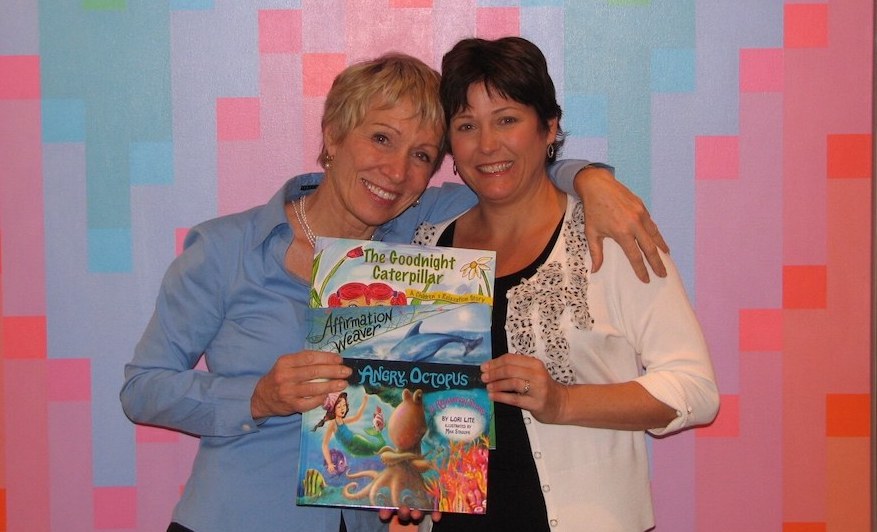
Thanks Lori and Wendy for mentioning Time-In not Time-Out new book coming!
Ava
Wow! It makes my heart sing to hear about all of the fabulous ways that parents and caretakers make such an effort to help kids develop social-emotional skills, as well as pull them towards greater and greater successes! It isn’t always easy and requires a great deal of emotional control on the adult’s part. I applaud everyone’s effort to help kids learn how to self-regulate, how to problem-solve and how to manage BIG feelings. The trick is really for us NOT to personalize misguided behaviors.
To answer Heather’s question, when comforting the child who was hurt, I would say something like, “I bet that was scary for you. I’m sorry you got hurt. I’m going to do whatever I can to help you feel better and I’ll do whatever I can to help (other child’s name) learn some better ways to get what he needs. We will all help each other here.” Of course, depending upon the age, you’d have to tweak it. The younger the child, the less you would need to say. Short and simple.
Happy parenting!
Wendy @Kidlutions
Terrific article Wendy! This post is extremely valuable and important. Through your expertise and caring heart of you have provided both the understanding and positive solutions for parents and early educators.
As you pointed out this is an common issue and concern for many parents. Through the information you have shared you will be helping numerous loving parents know how to handle these situations in the most beneficial way.
The book by the three of you is going to be outstanding and I am anxious to share it with the world!
Perfect timing for this article. My 3yr old son just started biting my other kids. He has had speech issues and I believe his lack of verbal communication gets frustrating for him (along with sharing). He’s turned into a hitter & kicker but has just started biting too.
I try to help him voice his frustrations by helping him with the words. I was hoping it was just an age thing, but I’m thinking its both.
Thanks Deborah, appreciate you are looking forward to the book by the three of us!
Wendy excellent as usual !!!
Heather did you get to speak to the mom of the child that was bitten?
That’s is always hard and sometime a little embarrassing .Also depends on the mom’s personality what you are going to say.
I have had this conversation many times with lots of moms. Most felt a I ‘m sorry my child bit yours ,I feel badly. I hope we can play again and have kids practice asking each other for things.
You can add,I am working hard on helping him use his words when he feels someone is in his space.
I mention the space issue because odds are the other child was up in your child’s face so the other child could probably benefit from subtle help with that. But you also dont want the mom to feel you are blaming her child. Although I firmly believe it take two to tango as they say:)
Rachel I wrote a book called Listen To Me Please that has pictures and words and conversation starters to help kids express feelings. A child can point to the feelings pictures instead of kicking and biting to express feelings till they learn their words..
best Ava
This is fantastic Ava! I have found that when I mention that we are working on changing a negative behavior, parents are more supportive. I also let parents know ahead of time (ie: dropping my child off at a play date) what behaviors we are working on and asking for the parents involvement which is mostly creating an awareness. This is part of the “it takes a village” approach and it is a “heads up” for parents to look for triggers. Thanks for sharing Ava
Great idea Lori to be proactive at drop offs and mention what you are working on .
I forgot that great tip as I am always hosting and playing with the kids on the playdates:)
I would love to use that in our new book Time-In Not Time-Out
Thanks Ava
Wow Ava…I would love for you to use that in your new book!
It is so true that children need to be taught how to appropriately respond to frustrations. The best time to teach this isn’t during a heated exchange that has already gotten out of hand. The best time is when they are calm and happy and interested in what you have to say. Thant’s why we parents have to think about what social skills, character qualities and behaviors our children need to know. Thank you for the interesting article.
You are so right….teach anger management during calm moments…teach relaxation during calm moments…I am seeing a pattern here….calm….